
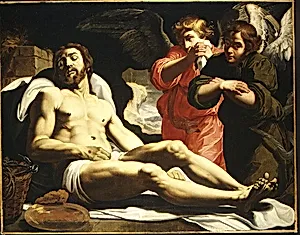
The Dead Christ in the Tomb with Two Angels
ca. 1610
Medium
Oil on canvas
Dimensions
45 3/8 x 58 in. (115.3 x 147.3 cm)
Classification
Paintings
Department
European Paintings
Museum
Metropolitan Museum of Art, New York, NY
Credit
Gift of James Belden, in memory of Evelyn Berry Belden, 1971
Accession Number
1971.101
Rights
Public Domain
Tags
Art Historical Context
In the somber glow of *The Dead Christ in the Tomb Two Angels* (ca. 1610), Flemish painter Abraham Janssens captures a moment of profound grief from the Passion of Christ. Oil on canvas, this expansive work measures over 45 by 58 inches, allowing Janssens to envelop viewers in the intimate drama of Christ's lifeless body laid out in the tomb, flanked by two sorrowful angels. Janssens, active in Antwerp during the early Baroque era, drew from Mannerist traditions with elongated figures and heightened emotional expression, blending them with emerging Caravaggesque tenebrism for dramatic chiaroscuro effects that heighten the pathos. This painting exemplifies the Counter-Reformation's call for emotive religious art in Catholic Flanders, where vivid depictions of Christ's suffering aimed to stir devotion amid Protestant challenges. Janssens, influenced by masters like Bartholomäus Spranger, infused the scene with a theatrical intensity that foreshadows the full-blown Baroque of Peter Paul Rubens, his contemporary. The angels' tender gestures—perhaps wiping tears or supporting the Savior—invite contemplation of mortality and redemption, making it a powerful devotional centerpiece. A generous gift to the Metropolitan Museum of Art in 1971, this work showcases Janssens' mastery of oil's luminous qualities, rendering pale flesh and shadowed drapery with haunting realism. Visitors, pause here to reflect on faith's quiet anguish.