
The Fall of Icarus
Medium
Pen and black ink, brush and gray wash, and gouache
Dimensions
sheet: 3 3/4 x 5 7/16 in. (9.5 x 13.8 cm)
Classification
Drawings
Department
Drawings and Prints
Museum
Metropolitan Museum of Art, New York, NY
Credit
Purchase, Jean A. Bonna Gift, 2007
Accession Number
2007.223.49
Rights
Public Domain
Tags
Art Historical Context
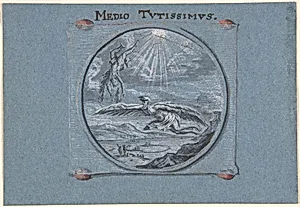
In the intricate drawing *The Fall of Icarus (1692), Johann Caspar Hessius captures pivotal moment from Greek mythology, where Icarus plummets toward the sea after flying too close to the sun his wax wings melting under its intense rays. Created on a modest sheet measuring just 3 3/4 x 5 7/16 inches, this work belongs to the Metropolitan Museum of Art's Drawings and Prints, acquired in 2007 through the Jean A. B Gift. The composition highlights dramatic elements like the blazing sun and rugged hills, evoking the timeless theme of human ambition and its perils, as told in Ovid's *Metamorphoses*. Hessius employs a masterful mixed-media technique: precise pen and black ink lines define forms and contours, while brush and gray wash add subtle tonal depth and atmospheric perspective. Touches of gouache provide opaque highlights, lending luminosity to the sun and a sense of immediacy to the fall. Such preparatory drawings from the late 17th century were prized for their spontaneity and skill, bridging Baroque dynamism with classical storytelling. This small-scale gem reflects the era's fascination with mythological narratives in Northern European art, inviting viewers to ponder Icarus's hubris amid nature's indifferent grandeur. A perfect study in humility and technical finesse!