
The First Communion
ca. 1896
Medium
Oil on canvas
Dimensions
25 3/4 x 21 in. (65.4 x 53.3 cm)
Classification
Paintings
Department
European Paintings
Museum
Metropolitan Museum of Art, New York, NY
Credit
Gift of Chester Dale, 1963
Accession Number
63.138.5
Rights
Public Domain
Tags
Art Historical Context
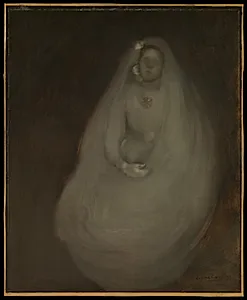
Eugène Carrière's *The First Communion* (ca 1896) is a poignant oil-on-canvas portrait measuring 25¾ × 21 inches, now housed in the Metropolitan Museum of Art's European Paintings department. Painted during the height of French Symbolism, depicts a young girl in the solemn rite of her First Communion—a key Catholic milestone marking spiritual awakening. Gifted by Chester Dale in 1963, this intimate work reflects late 19th-century domestic piety and the era's emphasis on childhood innocence amid rapid social change. Carrière, renowned for his dreamlike, atmospheric style, masterfully employs sfumato techniques—subtle blending of tones—to dissolve edges and create a hazy, ethereal glow. This soft focus, often likened to Whistler's influence, heightens emotional depth, drawing viewers into the subject's quiet reverence rather than sharp realism. His portraits of women and children, like this one, prioritize mood over detail, aligning with Symbolist ideals of evoking inner spirituality. Culturally, the painting underscores the enduring role of religious sacraments in French family life, blending tenderness with mysticism. A testament to Carrière's legacy, it invites visitors to linger on the subtle interplay of light and shadow, revealing profound humanity in a fleeting moment.
About the Artist
Eugène Carrière · 1849–1906
Eugène Carrière (1849–1906) was a French painter whose deeply personal and atmospheric canvases made him one of the most distinctive voices of the Symbolist generation. Born in Gournay-sur-Marne, Carrière trained at the École des Beaux-Arts in Paris under Alexandre Cabanel, though he quickly moved beyond the academic conventions he encountered there, forging an intensely individual manner that owe...