
The Four Accomplishments: Calligraphy
Ming dynasty (1368–1644), late 16th/early 17th century
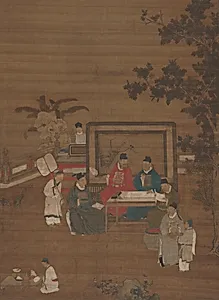
Medium
Hanging scroll mounted on a panel; ink and colors on silk
Dimensions
136.5 × 99.1 cm (53 3/4 × 39 in.); With mounting: 253 × 114 cm (100 × 45 in.)
Classification
hanging scroll
Department
Arts of Asia
Museum
Art Institute of Chicago
Accession Number
28426
Rights
Public Domain
Art Historical Context
This exquisite hanging scroll, *The Four Accomplishments:igraphy*, hails from China's Ming dynasty (1368–1644), the late 16th or early 17th century. Part the revered "Four Accomplishments" (si yi)—qin (music), qi (chess), shu (calligraphy), andua (painting)— celebrates calligraphy as a pinnacle of scholarly refinement. Inked and colored on luxurious silk and mounted on a panel, the work measures an impressive 136.5 × 99.1 cm, designed to unfurl dramatically for intimate viewing in a scholar's studio. During the Ming era, literati culture flourished, elevating calligraphy as a spiritual pursuit akin to poetry and moral cultivation. The medium of silk, prized for its smooth sheen and durability, allowed artists to blend fluid ink strokes with subtle colors, evoking elegance and harmony. Hanging scrolls like this were not mere decorations but ritual objects, unrolled seasonally to inspire contemplation and display connoisseurship. Housed in the Art Institute of Chicago's Arts of Asia department, this anonymous masterpiece captures the era's aesthetic ideals: restraint, vitality, and cultural prestige. It invites visitors to ponder how a single brush could embody the soul of Chinese intellectual life.
About the Artist
Unknown
The artist designated as "Unknown" in our virtual museum's collection exemplifies a poignant chapter in art history: creators whose identities have faded into obscurity despite the enduring power of their work. With only one known artwork attributed to them in our holdings, this figure represents countless anonymous hands that shaped visual culture across centuries. Museums worldwide, including th...