
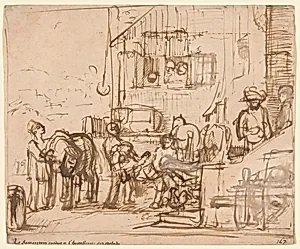
The Good Samaritan Arriving at the Inn
Medium
Pen and brown ink, heightened with white chalk, on buff laid paper
Dimensions
19.1 × 23.1 cm (7 9/16 × 9 1/8 in.)
Classification
pen and ink drawings
Department
Prints and Drawings
Museum
Art Institute of Chicago
Accession Number
49231
Rights
Public Domain
Art Historical Context
In the heart of the Dutch Golden Age, Constantijn Daniel van Renesse crafted *The Good Samaritan Arriving at the Inn around 1660, a poignant depiction of the biblical parable from Luke 10., the compassionate Samaritan gently supports the wounded traveler as they reach the inn, embodying themes of mercy and humanity that resonated deeply in 17th-century Protestant Netherlands. Van Renesse, a follower of Rembrandt van Rijn, infused his work with the master's dramatic humanism, capturing emotional depth in everyday acts of kindness amid a turbulent era of religious reflection. Executed in pen and brown ink heightened with white chalk on buff laid paper (19.1 × 23.1 cm), this drawing exemplifies the virtuoso techniques of the Rembrandt school. The fine ink lines delineate expressive figures and architectural details, while strategic white highlights create a luminous glow, simulating light falling on cloth and skin for vivid three-dimensionality. Such preparatory sketches were prized as independent artworks, valued for their spontaneity and skill in Dutch collections. Housed in the Art Institute of Chicago's Prints and Drawings department, this gem highlights van Renesse's underappreciated talent and the era's innovative draftsmanship, inviting visitors to ponder timeless lessons of empathy through masterful strokes.