
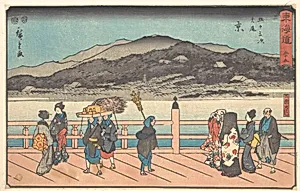
歌川広重画 「東海道 五十三次 大尾 京 三条大はし」|The Great Bridge at Sanjō (Taibi, Kyō, Sanjō Ōhashi), from the series The Tōkaidō Road: The Fifty-Three Stations (Tōkaidō: Gojūsan tsugi)
ca. 1847–52
Medium
Woodblock print; ink and color on paper
Dimensions
Overall: 8 3/4 x 13 3/4 in. (22.2 x 34.9 cm)
Classification
Prints
Culture & Period
Japan · Edo period (1615–1868)
Department
Asian Art
Museum
Metropolitan Museum of Art, New York, NY
Credit
The Francis Lathrop Collection, Purchase, Frederick C. Hewitt Fund, 1911
Accession Number
JP805
Rights
Public Domain
Tags
Art Historical Context
In the bustling world of 19th-century Japan, Utagawa Hiroshige captured the poetic beauty of everyday travel in his iconic series *The Tōkaidō Road: The Fifty-Three Stations (Tōkaidō gojūsan tsugi), produced around 1847–52. This woodblock print *The Great Bridge atjō (Taibi, Kyō, Sanjō Ōhashi)*, showcasing the majestic Sanjō Bridge spanning the Kamo River in Kyoto. Hiroshige masterfully frames the scene with elegant women crossing the bridge, their kimonos fluttering against a backdrop of flowing waters, distant mountains, and a vast sky, evoking the transient nature of life—a core theme in ukiyo-e, the "pictures of the floating world." As a pinnacle of Edo-period (1615–1868) art, this nishiki-e (brocade picture) exemplifies Hiroshige's genius in woodblock printing. Artisans meticulously carved blocks for each color layer—ink and vibrant pigments on paper—allowing mass production for an eager public. The Tōkaidō, the vital coastal route linking Edo (modern Tokyo) to Kyoto, symbolized imperial travel and commerce; Hiroshige's series romanticized its 53 relay stations, influencing global artists like Van Gogh and Whistler. Measuring just 8¾ x 13¾ inches, this intimate print from The Metropolitan Museum of Art's Asian Art collection invites viewers to ponder Japan's harmonious blend of human activity and nature, a timeless cultural treasure.
About the Artist
Utagawa Hiroshige · 1826–1869
Utagawa Hiroshige (1797–1858), born Andō Tokutarō, was the last great master of Japanese ukiyo-e woodblock printmaking and one of the most influential landscape artists in history. Born in Edo (modern Tokyo) into a low-ranking samurai family serving as fire wardens, Hiroshige transformed landscape printmaking into a poetic meditation on nature, weather, and everyday life. His revolutionary approac...