
The Hills
ca. 1919
Medium
Painting
Classification
Painting
Department
Smithsonian Collection
Museum
Smithsonian American Art Museum
Credit
Smithsonian American Art Museum, Gift of Flora E. H. Shawan from the Ferdinand Howald Collection
Accession Number
1965.11.1
Rights
Public Domain
Tags
About this artwork
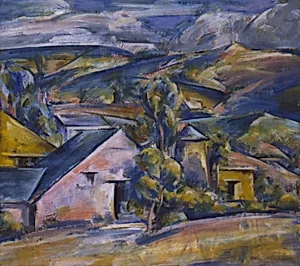
Preston Dickinson painted The Hills a few years after he returned to New York from France. He admired the work of the French modernist painters, especially Paul Cézanne, who transformed his subjects into simple shapes and planes of color. Dickinson composed this landscape from triangles and curves, and even the clouds reflect the shapes of the hills and buildings. The expressive brushstrokes and vibrant color evoke an energetic, windswept day in the countryside of New York.
Art Historical Context
**The Hills** by Preston Dickinson, painted around 1919, captures artist's fresh perspective after returning to New York from. Dickinson, an early American modernist, was deeply inspired by French innovators like Paul Cézanne, who revolutionized landscape painting by reducing forms to geometric shapes and planes of color. This work that influence, bridging European modernism with the American scene just after World War I, when artists sought new ways to express the vibrancy of everyday surroundings. In this lively painting, Dickinson transforms a windswept New York countryside—complete with rolling hills, a farmhouse, barn, and distant mountains—into a symphony of triangles, curves, and rhythmic forms. Even the clouds echo the contours of the land and buildings below, creating a harmonious, almost musical composition. His expressive brushstrokes and bold, vibrant colors pulse with energy, evoking the rush of a breezy day and inviting viewers to feel the landscape's dynamic spirit. Housed in the Smithsonian American Art Museum as a gift from the Ferdinand Howald Collection, **The Hills** showcases Dickinson's role in adapting modernist techniques to American subjects, making abstract ideas accessible and joyful for a new generation of viewers.