
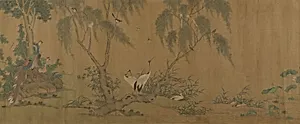
明/清 佚名 林椿(僞款) 百鳥圖 卷|The Hundred Birds
Medium
Handscroll; ink and color on silk
Dimensions
11 3/4 x 83 5/8 in. (29.8 x 212.4 cm)
Classification
Paintings
Culture & Period
China · Ming (1368–1644) or Qing dynasty (1644–1911)
Department
Asian Art
Museum
Metropolitan Museum of Art, New York, NY
Credit
From the Collection of A. W. Bahr, Purchase, Fletcher Fund, 1947
Accession Number
47.18.51
Rights
Public Domain
Tags
Art Historical Context
Behold *The Hundred Birds*, a captivating handscroll from China's Ming (1368–4) or Qing (1644–1911), painted in vibrant ink and color on silk Measuring nearly 7 feet long, this exquisite by an unidentified artist—bearing a false signature of Lin Chun—unfurls a lively parade of avian life, from majestic cranes to myriad songbirds, set against delicate floral backdrops. Handscrolls like this were prized in traditional Chinese culture for private contemplation, unrolled section by section to reveal intricate details over time. Bird-and-flower painting, or *huaoniao*, flourished during the Ming and Qing eras as a hallmark of literati art, blending technical virtuosity with symbolic depth. Cranes, prominently featured here, embody longevity and good fortune, while the sheer variety of "a hundred birds" evokes the harmony of nature and imperial abundance. The artist's masterful use of ink washes and vivid colors on silk creates a sense of movement and depth, inviting viewers to immerse themselves in this feathered symphony. Acquired from collector A. W. Bahr and now in the Metropolitan Museum of Art's Asian Art collection, *The Hundred Birds* exemplifies the enduring allure of Chinese scroll painting, bridging artistry and auspicious symbolism for generations of admirers.