
The Hundred Sons
Medium
Handscroll; ink and color on silk
Dimensions
9 3/4 x 101 1/2 in. (24.8 x 257.8 cm)
Classification
Paintings
Culture & Period
China · Ming (1368–1644) or Qing (1644–1911) dynasty
Department
Asian Art
Museum
Metropolitan Museum of Art, New York, NY
Credit
Gift of Mrs. Edward S. Harkness, 1942
Accession Number
42.68.2
Rights
Public Domain
Tags
Art Historical Context
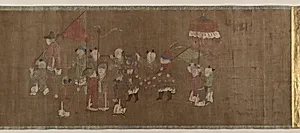
Behold *The Hundred Sons*, a handscroll from Ming (1368–1644) or Qing (1644–1911) dynasty China, now treasured at the Metropolitan Museum of Art. Crafted by an unidentified artist using ink and on luxurious silk, this elongated painting measures just under 10 inches high but stretches over 8 feet long (9 3/4 x 101 1/2 in.). Handscrolls like this were designed for intimate viewing: unrolled section by section on a table, revealing scenes gradually like a narrative unfolding in time—a hallmark of Chinese scroll painting tradition. The title evokes a joyous procession of boys at play, symbolizing the ultimate familial blessing in imperial China: numerous healthy sons to carry on the family line, ensure prosperity, and honor ancestors. Such whimsical depictions of children—frolicking, reading, or mimicking adult roles—were popular auspicious images for homes, celebrations, or as gifts wishing fertility and abundance. The delicate ink lines and vibrant colors on silk highlight masterful techniques in figure painting, blending realism with playful exaggeration typical of later Chinese decorative arts. Gifted to the Met in 1942 by Mrs. Edward S. Harkness, this anonymous gem offers a window into everyday dreams of late imperial life, reminding us how art wove hopes into silk.