
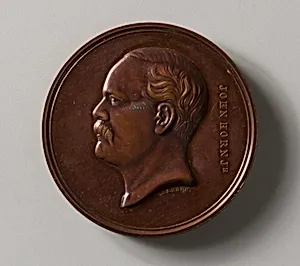
The "John Horn" Medal
Medium
Bronze
Dimensions
Diam. 1 7/8 in. (4.8 cm)
Classification
Medal
Culture
American
Department
The American Wing
Museum
Metropolitan Museum of Art, New York, NY
Credit
Gift of Mr. and Mrs. F. S. Wait, 1907
Accession Number
07.288.12
Rights
Public Domain
Tags
About this artwork
This bronze, created in 1874, represents significant artistic achievement by Charles E. Barber, a American artist. The piece demonstrates the technical capabilities and aesthetic conventions of American art during this historical period. Working in bronze, the artist employed materials and techniques characteristic of the era, creating visual effects that convey both subject matter and artistic vision. Museum collections preserve such works to ensure continued study and appreciation, providing o...
Art Historical Context
Created in 1874 by Charles E. Barber, *The "John Horn" Medal* is a finely crafted bronze portrait piece measuring just 1 7/8 inches in diameter. Housed in The American Wing of the Metropolitan Museum of Art, this work captures a profile view of its namesake subject, exemplifying the era's tradition of commemorative medals. Barber, a prominent American engraver known for his precision, renders the male figure with sharp detail, highlighting the technical mastery of 19th-century American portraiture. Cast in bronze—a durable medium favored for medals due to its ability to hold intricate engravings and achieve a rich patina—this piece showcases conventions of the period, such as classical profiles inspired by ancient coinage. The relief technique allows for dynamic light and shadow play, conveying both realism and dignity. Such medals often honored notable individuals, blending artistry with personal or civic commemoration. Preserved through the 1907 gift of Mr. and Mrs. F. S. Wait, the medal reflects America's post-Civil War cultural flourishing, when numismatic art bridged fine arts and everyday symbolism. Today, it invites visitors to appreciate how small-scale works like this preserved legacies, offering a window into the aesthetic priorities and craftsmanship of 1874.