
The Lovers
1913
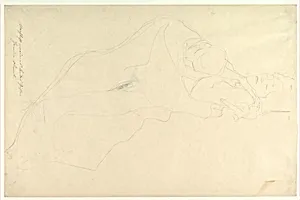
Medium
Graphite
Dimensions
Sheet: 14 5/8 × 22 1/4 in. (37.1 × 56.5 cm) Frame: 23 × 29 × 1 1/2 in. (58.4 × 73.7 × 3.8 cm)
Classification
Drawings
Department
Drawings and Prints
Museum
Metropolitan Museum of Art, New York, NY
Credit
Bequest of Scofield Thayer, 1982
Accession Number
1984.433.197
Rights
Public Domain
Tags
Art Historical Context
Gustav Klimt's *The Lovers* (1913), a delicate graphite drawing on paper, captures an intimate embrace between a man and a woman, their forms intertwined in a tender, sensual pose. Measuring 14 5/8 × 22 1/4 inches, this work exemplifies Klimt's mastery of line and shading in preparatory sketches, a departure from his more opulent oil paintings adorned with gold leaf and intricate patterns. As a leading figure in Vienna's Secessionist movement and Art Nouveau, Klimt often explored themes of love,ism, and the human form with bold psychological depth. Created late in his career, just five years before his death, *The Lovers* reflects his enduring fascination with romantic intimacy amid the cultural upheavals of pre-World War I Europe. The graphite medium highlights his precise draftsmanship, allowing fluid contours and subtle tonal gradients that convey emotional vulnerability. Housed in the Metropolitan Museum of Art's Department of Drawings and Prints through the bequest of Scofield Thayer in 1982, this piece offers a rare glimpse into Klimt's private creative process. For visitors, it embodies the artist's celebration of human connection, bridging personal passion with modernist innovation.
About the Artist
Gustav Klimt · 1862–1918
Gustav Klimt was born on July 14, 1862, in Baumgarten near Vienna, the second of seven children in a modest family of artistic bent. His father, Ernst Klimt, a gold engraver who had immigrated from Bohemia, and his mother, Anna Finster, an aspiring musician, instilled an early appreciation for craft and creativity amid financial hardship. Klimt displayed prodigious drawing talent, prompting his en...