Ctrl K
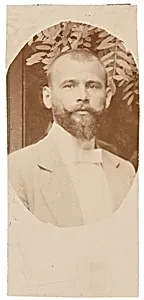
1862–1918
Gustav Klimt was born on July 14, 1862, in Baumgarten near Vienna, the second of seven children in a modest family of artistic bent. His father, Ernst Klimt, a gold engraver who had immigrated from Bohemia, and his mother, Anna Finster, an aspiring musician, instilled an early appreciation for craft and creativity amid financial hardship. Klimt displayed prodigious drawing talent, prompting his enrollment at age 14 in the Vienna School of Arts and Crafts (Kunstgewerbeschule), where he studied architectural painting from 1876 to 1883. He trained under Ferdinand Laufberger and, following Laufberger's death in 1881, Julius Victor Berger, honing skills in decorative murals alongside classmates like his younger brother Ernst Klimt and Franz Matsch. Upon graduating, the trio formed the Künstler-Compagnie, securing commissions for public murals, including interiors at the Burgtheater.
Klimt's style evolved from academic historicism to a bold symbolist idiom, characterized by swirling patterns, gold leaf, and sensual female figures, aligning him with Art Nouveau influences. In 1897, he co-founded the Vienna Secession, serving as its first president until 1905, rebelling against conservative academies to champion modern art through exhibitions and the journal Ver Sacrum. This movement positioned him at the forefront of Vienna's fin-de-siècle cultural ferment, blending Byzantine opulence with eroticism and psychological depth.
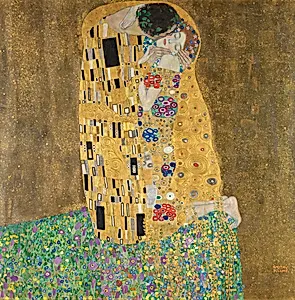
Among his masterpieces are the controversial Faculty Paintings (1894), three ceiling panels—Philosophy, Medicine, and Jurisprudence—for the University of Vienna, which scandalized critics for their allegorical nudity and perceived pessimism, leading Klimt to withdraw them unfinished. Later icons include The Kiss (1907–08), with its gilded lovers, and Portrait of Adele Bloch-Bauer I (1907), exemplifying his "Golden Phase."
Klimt's legacy endures as a pioneer of modernism, influencing Expressionism and abstraction while embodying Vienna Secession's decorative vitality. Dying on February 6, 1918, after a stroke, he left over 200 works in our collection, his shimmering visions of desire and ornamentation captivating generations.