
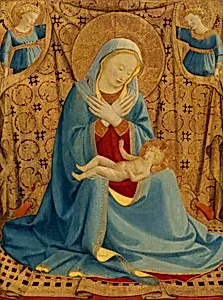
The Madonna of Humility
c. 1430
Medium
tempera on panel
Dimensions
painted surface: 60.7 x 45.2 cm (23 7/8 x 17 13/16 in.) support: 62.8 x 47.2 cm (24 3/4 x 18 9/16 in.)
Classification
Painting
Department
CIS-R
Museum
National Gallery of Art, Washington, D.C.
Credit
Andrew W. Mellon Collection
Accession Number
1937.1.5
Rights
Public Domain
Art Historical Context
**The Madonna of Humility by Fra Angelico, around 1430, captures the Virgin Mary seated humbly on the ground, cradling the Christ Child in a serene, intimate moment. Fra Angelico, a Dominican friar and early Renaissance master from Florence (c. 1395–1455), painted this tempera-on-panel devotional work during a time when religious art emphasized spiritual purity and divine grace. Measuring about 24 x 18 inches, its modest scale suggests it was intended for private prayer, perhaps in a monk's cell or noble home, reflecting the era's growing demand for personal piety amid Italy's cultural rebirth. This "Madonna of Humility" type, popularized in 14th-century Italy, symbolized Mary's voluntary lowliness, contrasting grand enthroned Madonnas and aligning with Franciscan ideals of poverty. Fra Angelico's luminous style—bridging Gothic elegance with Renaissance naturalism—shines here through delicate figures, soft modeling, and likely gold leaf accents (common in tempera panels), evoking heavenly light. His technique, using egg-tempera for vibrant, durable colors and fine detail, exemplifies pre-oil painting precision. Housed in the National Gallery of Art's Andrew W. Mellon Collection, this gem highlights Fra Angelico's beatified legacy as "Angelic Painter," blending devotion with artistic innovation to inspire quiet contemplation.