
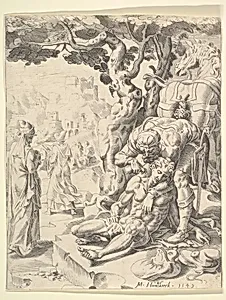
The Parable of the Good Samaritan
Medium
Etching
Dimensions
Sheet: 9 13/16 x 7 7/8 in. (25 x 20 cm)
Classification
Prints
Department
Drawings and Prints
Museum
Metropolitan Museum of Art, New York, NY
Credit
Harris Brisbane Dick Fund, 1966
Accession Number
66.602.12(2)
Rights
Public Domain
Tags
Art Historical Context
In the bustling world of 16th-century Northern Renaissance printmaking, *The Parable of the Good Samaritan (1549) stands as a masterful etching by Dutch artist Maarten van Heemskck, with engraving assistance from Dirck Volckertsz Coornhert. This intimate sheet, measuring just under 10 by 8 inches, the biblical story from Luke 10, where a Samaritan aids a robbed traveler ignored by others, emphasizing themes of compassion and neighborly love amid religious tensions of the Reformation era. Heemskerck, fresh from Italian travels that infused his Mannerist style with dynamic compositions and expressive figures, designed the scene teeming with men and trees—likely evoking a rugged landscape. Coornhert's precise etching technique, using acid to etch intricate lines into a metal plate, allowed for rich tonal depth and widespread dissemination of moral narratives. Etchings like this democratized art, making complex religious lessons accessible beyond elite patrons. Housed in the Metropolitan Museum of Art's Drawings and Prints department (Harris Brisbane Dick Fund, 1966), this print exemplifies collaborative innovation, blending Heemskerck's visionary draftsmanship with Coornhert's technical prowess. It's a poignant reminder of art's power to illustrate timeless virtues in an age of upheaval.