
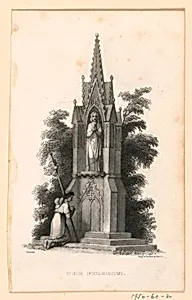
The Pilgrim
Medium
Classification
Department
Smithsonian Collection
Museum
Smithsonian American Art Museum
Credit
Gift of Anonymous Donor
Accession Number
1952-60-2
Rights
Public Domain
About this artwork
Research in Progress
Art Historical Context
John Sartain’s “The Pilgrim,” created in 1847, offers a glimpse into mid-nineteenth-century American printmaking. Born in England and later a leading figure in Philadelphia’s art community, Sartain helped popularize mezzotint and other engraving techniques that brought fine art into middle-class homes. As a reproductive print, the work likely translated a painted subject for a broader audience, reflecting the era’s growing interest in accessible cultural imagery. Housed in the Smithsonian American Art Museum, this piece underscores the vital role prints played in shaping national identity before photography became widespread. Gifted by an anonymous donor, it now invites visitors to consider how such works circulated ideas of faith, journey, and perseverance—themes suggested by the title—during a period of westward expansion and social change. Because research on the print remains ongoing, “The Pilgrim” stands as an open invitation for further discovery, reminding us that even seemingly modest works can illuminate the artistic networks and aspirations of their time.