
The Port of Monaco
1873
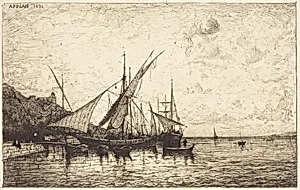
Medium
etching and drypoint on heavy laid paper
Dimensions
plate: 15.8 x 23.5 cm (6 1/4 x 9 1/4 in.) sheet: 35.7 x 50.9 cm (14 1/16 x 20 1/16 in.)
Classification
Department
CG-E
Museum
National Gallery of Art, Washington, D.C.
Credit
Ailsa Mellon Bruce Fund
Accession Number
1990.17.1
Rights
Public Domain
Art Historical Context
Adolphe Appian’s “The Port of Monaco” (1873) captures a tranquil Mediterranean harbor scene through the delicate precision of etching and drypoint. Working on heavy laid paper, Appian used these intaglio techniques to render subtle gradations of light and texture, from the gentle ripples of the water to the clustered forms of boats and distant shoreline. The modest plate size—just over six by nine inches—invites close viewing, rewarding the eye with fine lines and velvety drypoint burr that evoke atmosphere rather than minute detail. Created during a period when original printmaking enjoyed renewed appreciation among artists and collectors, this work reflects the nineteenth-century interest in translating observed landscape into intimate, reproducible art. The generous margins of the sheet further emphasize the print as an object meant for quiet contemplation, typical of presentation practices at institutions like the National Gallery of Art, where it now resides. Appian’s choice of Monaco as subject matter speaks to the era’s fascination with coastal locales as emblems of leisure and natural beauty, rendered here with quiet restraint rather than dramatic effect.
About the Artist
Adolphe Appian · 1818–1898
Adolphe Appian, born Jacques Barthélemy Adolphe Appian in Lyon, France, on August 28, 1819, began his artistic training at the age of fifteen at the École des Beaux-Arts de Lyon. There, he studied under the landscape painters Jean-Michel Grobon and Augustin Alexandre Thierrat, initially focusing on fabric decoration for the city's thriving silk industry. This practical grounding in drawing honed h...