
The Procuress
after 1623
Medium
oil on canvas
Dimensions
95.3; 99.5; 9
Rights
Public Domain
About this artwork
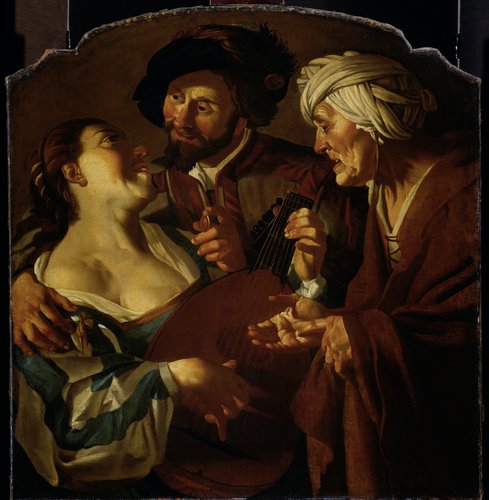
Groep van drie personen: rechts een koppelaarster, in het midden een jonge man met een geldstuk en links een lachende jonge vrouw met een luit.
Art Historical Context
**The Procuress** by Dirck van Bab, painted after 1623, captures a lively yet morally charged moment in oil on canvas (99.5 × 95.3 cm). Housed in the Rijksmuseum, this work exemplifies the Utrecht Caravaggism movement, where Baburen and his peers drew from Caravaggio's dramatic realism and tenebrism—bold contrasts of light and shadow bring everyday scenes to vivid life. The half-length composition draws viewers into an intimate interior, highlighting the artist's skill in rendering textures like the woman's flowing dress and the gleam of a coin. At center stage, a young man offers a gold coin to a laughing woman holding a lute on the left, while a shrewd procuress gestures knowingly from the right. This classic Dutch genre scene of seduction and vice was popular in the early 17th century, blending entertainment with subtle moral warnings about fleeting pleasures and exploitation. The lute, often a symbol of harmony or love in art, here hints at deceptive allure. Baburen's earthy figures and psychological tension reflect the Utrecht school's innovative fusion of Italian Baroque with Northern realism during the Dutch Golden Age, making bawdy subjects accessible and thought-provoking for contemporary audiences. A masterful study in human interaction, it invites us to ponder the timeless dance of desire and transaction.
About the Artist
Dirck van Baburen · 1585–1624
One of the Utrecht Caravaggists, the first artist to introduce the dramatic chiaroscuro of Caravaggio to the Netherlands. Comment on works: Genre; History; Biblical (Caravaggesque)