
The Prodigal Son
probably c. 1879
Medium
oil on linen
Dimensions
overall: 106.5 x 146.7 cm (41 15/16 x 57 3/4 in.) framed: 130.8 x 171.1 x 7 cm (51 1/2 x 67 3/8 x 2 3/4 in.)
Classification
Painting
Department
CF
Museum
National Gallery of Art, Washington, D.C.
Credit
Chester Dale Collection
Accession Number
1963.10.200
Rights
Public Domain
Art Historical Context
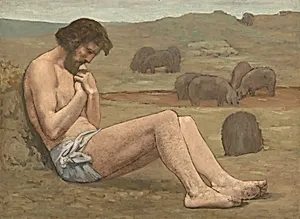
Pierre Puvis de Chav's *The Prodigal*, likely painted around 1879, captures the timeless biblical parable from Luke 15, where a wayward son returns home to forgiving father's embrace. This oil on linen work, measuring 106.5 x 146.7 cm, exemplifies Puvis's mastery of narrative scenes drawn from scripture and classical mythology, themes that resonated in late 19th-century France amid a revival of moral and spiritual art. A pivotal figure in French Symbolism, Puvis (1824–1898) blended academic precision with dreamlike idealism, often employing simplified forms, muted palettes, and ethereal figures to evoke introspection. His murals for public buildings influenced modern artists like Gauguin and Seurat, making this intimate canvas a rare easel painting that showcases his poetic style outside grand commissions. Housed in the National Gallery of Art's Chester Dale Collection, *The Prodigal Son* highlights Puvis's enduring cultural importance as a bridge between Romanticism and modernism, inviting visitors to reflect on themes of redemption and humanity's shared vulnerabilities.
About the Artist
Pierre Puvis de Chavannes · 1824–1898
Pierre Puvis de Chavannes (1824–1898) was a French painter who became the foremost muralist of nineteenth-century France and a crucial bridge between academic tradition and modernism. Born in Lyon to a prosperous family, he studied briefly with Henri Scheffer and Thomas Couture in Paris and traveled to Italy, where the frescoes of the Italian Renaissance made a lasting impression on his artistic v...