
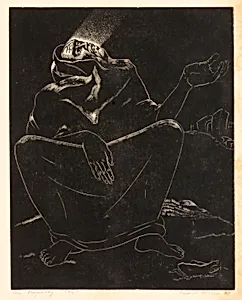
The Prophecy
1939
Medium
Graphic Arts-Print
Classification
Graphic Arts-Print
Department
Smithsonian Collection
Museum
Smithsonian American Art Museum
Credit
Smithsonian American Art Museum, Transfer from D.C. Public Library
Accession Number
1967.72.95
Rights
Public Domain
Art Historical Context
**The Prophecy** (1939) is a striking graphic print by Todros G, a Ukrainian-born Jewish who immigrated to the States and became a prominent in Chicago's vibrant art scene. Working primarily as a printmaker and muralist, Geller drew from social realism and influences like the Mexican muralists, using his art to address themes of labor, Jewish identity, and social justice. This work, held in the Smithsonian American Art Museum collection (transferred from the D.C Public Library), exemplifies the of graphic arts during the late 1930s—a medium ideal for bold, reproducible statements amid economic hardship and global unrest. Created on the eve of World War II, *The Prophecy* evokes the ominous shadows of rising fascism in Europe, particularly resonant for Geller as a Jewish artist attuned to the perils facing his people. Prints like this allowed artists to disseminate urgent messages widely, mirroring the era's political posters and activist broadsides. Its title suggests a visionary warning, capturing the tension between hope and foreboding in American art responding to international crises. Today, this piece highlights how U.S. artists engaged with worldly events, preserving Geller's legacy in advocating for humanity through accessible, impactful imagery. Visitors will appreciate its role in the Smithsonian's chronicle of 20th-century graphic expression. (198 words)