
銀世界|The Silver World (Gin sekai)
preface dated 1790
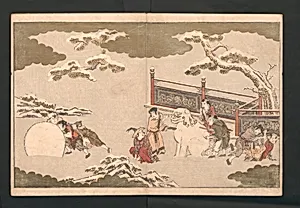
Medium
Polychrome woodblock printed book; ink and color on paper
Dimensions
10 1/16 x 7 1/2 in. (25.5 x 19 cm)
Classification
Illustrated Books
Culture & Period
Japan · Edo period (1615–1868)
Department
Asian Art
Museum
Metropolitan Museum of Art, New York, NY
Credit
The Howard Mansfield Collection, Gift of Howard Mansfield, 1936
Accession Number
JIB89
Rights
Public Domain
Tags
Art Historical Context
### The Silver World (Gin sekai) Step into the enchanting wintry realm of *The Silver World* (Gin sekai), arome woodblock printed book by the renowned Japanese artist Kitagawa Utamaro in1790, during the Edo period (161–1868). Utamaro, a master ofkiyo-e—the "pictures of the floating world" that celebrated everyday beauty and fleeting moments—produced this illustrated volume using ink and color on paper. Measuring a compact 10 1/16 x 7 1/2 inches, it exemplifies the exquisite craftsmanship of woodblock printing, where intricate carved blocks were inked in multiple colors and precisely overlaid to create vibrant, layered images accessible to a wide audience beyond the elite. The book features delicate depictions of human figures set against snowy landscapes, moonlit trees, and pristine winter scenes—themes evoking Japan's poetic reverence for nature's ephemeral beauty, often symbolized in setsugekka (snow, moon, and flowers). Utamaro's signature style shines through in his fluid lines and subtle color gradients, capturing the serene interplay of light on frost-kissed branches and elegant figures traversing this "silver world." Housed in the Metropolitan Museum of Art's Asian Art Department as part of The Howard Mansfield Collection (gift of 1936), *Gin sekai* highlights the cultural flourishing of Edo-period publishing, where art books like this democratized visual storytelling. It invites visitors to appreciate how Utamaro transformed simple natural motifs into profound meditations on transience and grace.
About the Artist
Kitagawa Utamaro · 1753–1806
Kitagawa Utamaro (c. 1753-1806) was one of the most celebrated masters of ukiyo-e woodblock printing, revolutionizing the art of bijin-ga (pictures of beautiful women) during Japan's Edo period. Born Kitagawa Ichitaro, his early life remains shrouded in mystery, with conflicting accounts placing his birth in Kyoto, Osaka, Yoshiwara in Edo (modern Tokyo), or Kawagoe in Musashi Province. Under the t...