
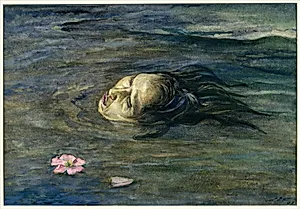
The Strange Thing Little Kiosai Saw in the River
1897
Medium
Watercolor and gouache on Japanese tissue laid down on white wove paper
Dimensions
12 7/16 x 18 3/16 in. (31.6 x 46.2 cm)
Classification
Watercolor
Culture
American
Department
The American Wing
Museum
Metropolitan Museum of Art, New York, NY
Credit
Rogers Fund, 1917
Accession Number
17.180.2
Rights
Public Domain
Tags
Art Historical Context
John La Farge's *The Strange Thing Little Kai Saw in the River (1897) captivates with its delicate watercolor and gouache on Japanese tissue, laid down white wove paper. 12 7/16 x 18 3/16 inches, this intimate work from the Metropolitan Museum of Art's American evokes a sense of mystery along a shimmering river, where enigmatic heads emerge from the water—perhaps hinting at folklore or a child's wondrous vision. La Farge, a pioneering artist of the Aesthetic Movement, was renowned for his innovative use of light and color, often drawing from his travels to Japan. Here, the translucent Japanese tissue allows gouache and watercolor to blend in luminous, stained-glass-like effects, mimicking the opacity and glow of traditional Asian papers. This technique underscores his experimentation during the late 19th century, when Western artists embraced Japonisme amid growing cultural exchanges. Acquired through the Rogers Fund in 1917, the painting reflects America's artistic dialogue with the East, blending narrative whimsy with technical mastery. Visitors are invited to ponder Little Kiosai's discovery, a poetic reminder of how rivers have long symbolized the uncanny in art.
About the Artist
John La Farge · 1835–1910
John La Farge (1835–1910) was born into a wealthy French émigré family in New York City, the son of John Frederick La Farge and Louisa Binsse de Saint-Victor. Educated at Jesuit institutions including Mount St. Mary's College in Maryland and St. John's College (now Fordham University), he initially pursued law but turned to art after receiving early drawing lessons from his maternal grandfather, a...