Ctrl K
1835–1910
John La Farge (1835–1910) was born into a wealthy French émigré family in New York City, the son of John Frederick La Farge and Louisa Binsse de Saint-Victor. Educated at Jesuit institutions including Mount St. Mary's College in Maryland and St. John's College (now Fordham University), he initially pursued law but turned to art after receiving early drawing lessons from his maternal grandfather, a miniature painter, and an English watercolorist during grammar school. He studied painting under Régis François Gignoux before traveling to Europe in 1856, where he worked in the studio of Thomas Couture in Paris. Upon returning to the United States, La Farge studied under William Morris Hunt in Newport, Rhode Island, where he befriended the James brothers. In 1860, he married Margaret Mason Perry, a descendant of Mayflower passenger William Brewster; the couple had eight children, including architects Christopher Grant La Farge and Oliver Hazard Perry La Farge.
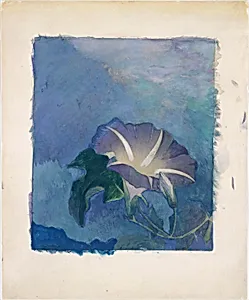
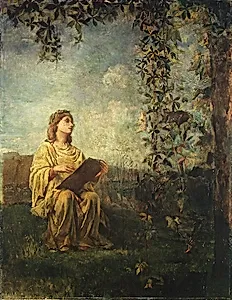
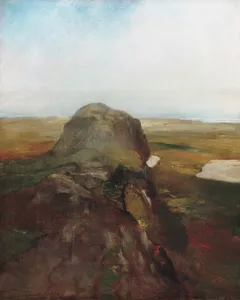
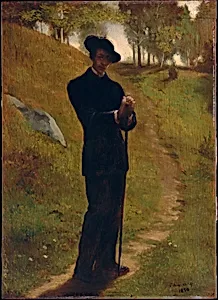
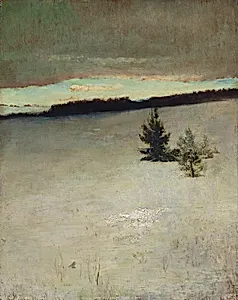
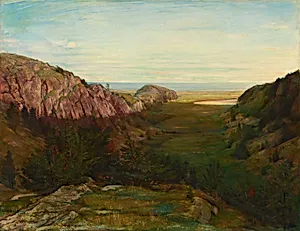
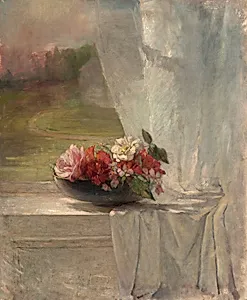
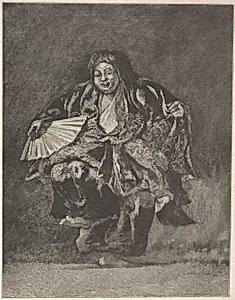
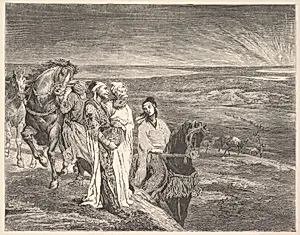
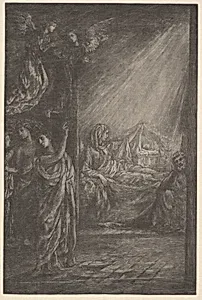
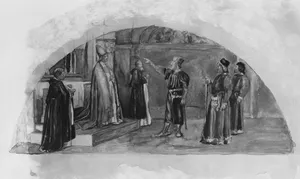
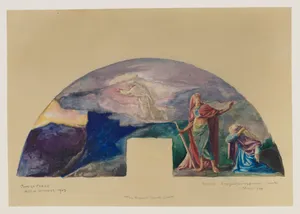
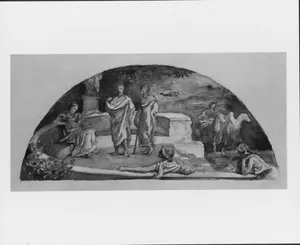
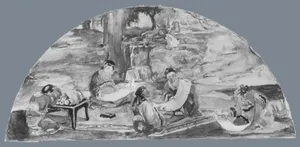
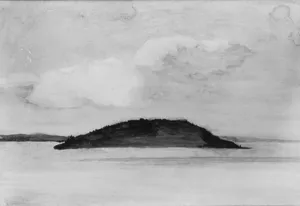
La Farge's early career focused on landscapes painted en plein air, floral still lifes, and illustrations for poets like Tennyson and Browning. Influenced by European masters such as Titian, Rubens, and Delacroix, as well as Japanese prints he imported as early as 1863, his style blended realism akin to Courbet and Manet with Pre-Raphaelite detail and Impressionistic color. Notable paintings include *The Muse of Painting* (1870) and religious works like *St. John the Evangelist at the Foot of the Cross* (1862–63). His breakthrough came with murals, starting with Trinity Church in Boston (completed 1876), a collaboration with H.H. Richardson and Augustus Saint-Gaudens that showcased rich ornamentation, followed by the Ascension mural at Church of the Ascension, New York (1888), and lunettes depicting the history of law at the Minnesota State Capitol (1905) and Baltimore Courthouse (1906–07).
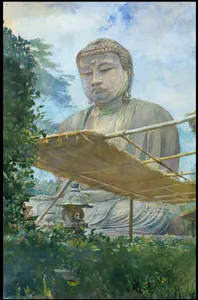
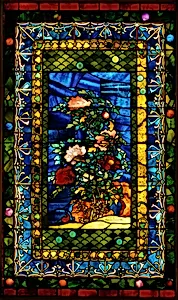
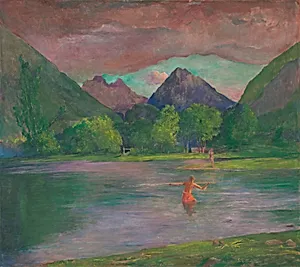
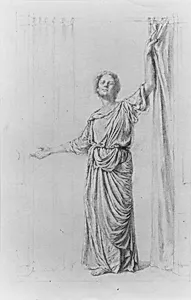
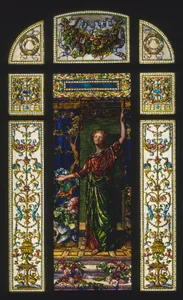
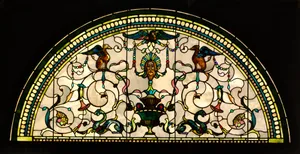
In the mid-1870s, La Farge revolutionized stained glass by inventing opalescent techniques, layering slabs for luminous, three-dimensional effects; he secured U.S. patents in 1880 and 1883. His windows graced Trinity Church (e.g., *Christ in Majesty*, 1883), Harvard's Memorial Hall, and churches nationwide, including the Peabody window at Southwark Cathedral (1907). Travels to Japan (1886) with Henry Adams and the South Seas (1890–91) inspired vibrant watercolors like those from Samoa and Tahiti. In 1877, he co-founded the Society of American Artists and later led the National Society of Mural Painters.
La Farge's legacy endures as a pioneer of American decorative arts, bridging painting, murals, and stained glass while fostering modernism against conservative academies. Awarded France's Legion of Honor in 1889, his innovations influenced generations, though rivalries like his dispute with Louis Comfort Tiffany marked his competitive spirit. Dying in Providence at 75, he left over 250 oils, 1,200 watercolors, and hundreds of windows that illuminate his era's aesthetic ambition.