
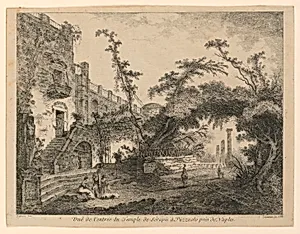
The Temple of Serapis
Medium
architecture
Classification
architecture
Department
Smithsonian Collection
Museum
Smithsonian American Art Museum
Credit
Bequest of Erskine Hewitt
Accession Number
1938-57-748
Rights
Public Domain
About this artwork
Research in Progress
Art Historical Context
Jean-Baptiste Saint-Non, a prominent French engraver and antiquarian (1727–1791), the majestic ruins of the Temple of Serapis around 1762 during his travels through Italy. This architectural rendering, housed in the Smithsonian American Art's collection (Bequest of Erskine), depicts the ancient Roman structure in Pozzuoli, Naples—a marvel dedicated to the Greco-Egyptian god Serapis the 2nd century AD. Saint-Non's precise draftsmanship reflects the era's fascination with classical antiquity, blending meticulous observation with artistic elegance. As part of the Enlightenment's Grand Tour tradition, works like this veduta (topographical view) served as visual documents, educating Europe's elite about imperial Roman engineering. The temple's dramatic columns, rising from marshy ground amid volcanic activity, symbolized resilience; ancient sources note it withstood earthquakes, showcasing innovative use of brick-faced concrete. Saint-Non's etching technique—likely combining drawing and printmaking—disseminated these scenes through illustrated travel books, influencing Neoclassical architects like those behind Washington's own capitol. Today, this piece invites visitors to ponder the dialogue between past and present, bridging 18th-century curiosity with the enduring allure of ancient wonders. (198 words)