
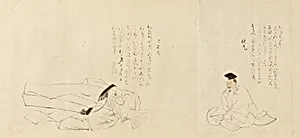
酒井抱一筆 三十六歌仙図|The Thirty-Six Poetic Immortals
1824
Medium
Handscroll; ink and color on paper
Dimensions
Overall with mounting: 11 5/8 × 27 ft. 1 13/16 in. (29.5 × 827.6 cm)
Classification
Paintings
Culture & Period
Japan · Edo period (1615–1868)
Department
Asian Art
Museum
Metropolitan Museum of Art, New York, NY
Credit
Mary Griggs Burke Collection, Gift of the Mary and Jackson Burke Foundation, 2015
Accession Number
2015.300.94
Rights
Public Domain
Tags
Art Historical Context
Step into the elegant world of Edo-period Japan with Sakai Hōitsu's *The Thirty-Six Poeticortals* (1824), a handscroll that celebrates Japan's revered waka poets. Created during the late Edo period (1615–1868), a time of cultural flourishing and artistic refinement, this work honors the 36 classical masters— all men—whose verses shaped Japanese literature from the Heian era onward. Hōitsu, a master of decorative painting, captures their poetic spirits through vivid portraits, blending ink and delicate colors on paper to evoke timeless wisdom and grace. Measuring an impressive 11 5/8 × 27 feet when fully unrolled, this handscroll exemplifies the emakimono tradition, designed for intimate, sequential viewing. As you imagine slowly revealing each immortal, the artwork unfolds like a poetic journey, showcasing Hōitsu's skillful use of mineral pigments and gold for luminous effects that highlight the poets' contemplative expressions and scholarly robes. Housed in the Metropolitan Museum of Art's Mary Griggs Burke Collection, this piece underscores poetry's enduring role in Japanese culture, bridging literature and visual art. It's a window into how Edo artists immortalized cultural heroes, inviting visitors to ponder the verses that inspired them.
About the Artist
Sakai Hōitsu · 1761–1828
Japanese, 1761–1828