
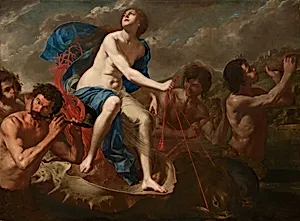
The Triumph of Galatea
c. 1650
Medium
oil on canvas
Dimensions
original canvas: 148.3 × 203 cm (58 3/8 × 79 15/16 in.) with extensions: 152.1 × 205.1 cm (59 7/8 × 80 3/4 in.) framed: 178.75 × 234.32 × 15.24 cm (70 3/8 × 92 1/4 × 6 in.)
Classification
Painting
Department
CIS-B
Museum
National Gallery of Art, Washington, D.C.
Credit
Patrons' Permanent Fund
Accession Number
2000.61.1
Rights
Public Domain
Art Historical Context
Behold *The Triumph of Galatea a captivating oil on canvas by Neapolitan Baroque master Bernardo Cavallino, around 1650. This grand work (originally 148.3 × 203 cm, later extended to 152.1 × 205.1 cm) depicts the mythological sea nymph Galatea triumphantly riding a chariot drawn by dolphins, surrounded by frolicking sea creatures and cupids. Drawing from Ovid's *Metamorphoses it celebrates themes of love, beauty, and the sea's enchantment, rendered with Cavallino's signature luminous colors and fluid, dynamic forms. Cavallino, active in 17th-century Naples under Spanish rule, blended Caravaggesque tenebrism—dramatic light and shadow—with a delicate, poetic elegance rare among his contemporaries. His oil technique allows for velvety textures in the waves and ethereal glow on Galatea's skin, evoking the sensual vitality of Baroque art. This piece exemplifies Naples' vibrant artistic scene, where religious and classical subjects merged to inspire awe. Acquired through the National Gallery of Art's Patrons' Permanent Fund, *The Triumph of Galatea* highlights Cavallino's underrated genius, often overshadowed by larger Neapolitan peers. Its canvas extensions suggest adaptations for grandeur, making it a window into both artistic evolution and the enduring allure of classical myth in the Baroque era.