
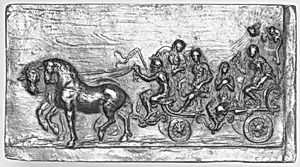
The Triumph of the Church
Unknown Artist
last quarter 16th century
Medium
Lead
Dimensions
H. 2 11/16 x W. 5 in. (6.8 x 12.7 cm.)
Classification
Medals and Plaquettes
Culture
Netherlandish
Department
European Sculpture and Decorative Arts
Museum
Metropolitan Museum of Art, New York, NY
Credit
The Erich Lederer Collection, Gift of Mrs. Erich Lederer, 1986
Accession Number
1986.319.47
Rights
Public Domain
Tags
Art Historical Context
Crafted in the last quarter of the 16 century by an unknown Netherlandish artist,The Triumph of the Church is a delicate lead plaquette measuring just 2 11/16 by 5 inches. These small-scale relief sculptures, classified as medals and plaquettes, were popular in Renaissance Europe as affordable, portable artworks—often used for personal devotion, commemoration, or subtle propaganda. Lead, a less precious medium than bronze or gold, allowed for wider distribution while preserving fine details in low relief. The title evokes a classic allegorical theme of ecclesiastical victory, likely depicting men, women, horses, and chariots in a triumphal procession. Produced during the turbulent Counter-Reformation in the Netherlands—amid religious wars between Catholic forces and Protestant reformers—this piece reflects the era's fervent Catholic iconography. The Church, often personified as a triumphant figure in a chariot, symbolized spiritual dominance over heresy. Housed in the Metropolitan Museum of Art's European Sculpture and Decorative Arts department, thanks to the Erich Lederer Collection gift, this modest object packs profound cultural weight. It showcases Netherlandish mastery of intricate modeling on a miniature scale, inviting visitors to ponder the power of faith amid 16th-century upheaval.