
The Waterloo Medal
mid-19th century
Medium
Lead
Dimensions
Diameter: 135 mm
Classification
Medals and Plaquettes
Culture
British
Department
European Sculpture and Decorative Arts
Museum
Metropolitan Museum of Art, New York, NY
Credit
Gift of Assunta Sommella Peluso, Ignazio Peluso, Ada Peluso and Romano I. Peluso, 2010
Accession Number
2010.417.4
Rights
Public Domain
Tags
Art Historical Context
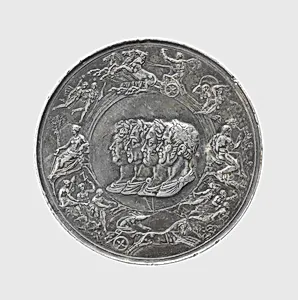
Benedetto Pistrucci’s Waterloo Medal stands as a remarkable example of nineteenth-century medallic art. Created in lead during the mid-1800s, this circular work measures 135 millimeters in diameter and captures the neoclassical grandeur associated with the artist’s Italian-British practice. Pistrucci, renowned for his precise engraving skills, designed the piece to commemorate the 1815 Battle of Waterloo, employing detailed profiles and dynamic chariot scenes that evoke victory and heroic triumph. The medal’s lead model highlights the meticulous craftsmanship required for such commemorative objects, which were often intended for striking in precious metals. Though never produced on the grand scale originally envisioned, this version preserves Pistrucci’s ambitious vision of allegorical figures celebrating the allied victory over Napoleon. Its presence in the Metropolitan Museum’s collection of European Sculpture and Decorative Arts underscores the enduring cultural importance of medals as portable monuments to historical events. Visitors can appreciate how the work blends portraiture with symbolic narrative, reflecting Britain’s post-Napoleonic pride and the technical artistry of the period.
About the Artist
Benedetto Pistrucci · 1783–1855
Italian, 1783–1855, active England