
The Young Woman and the Jester
ca. 1640–50
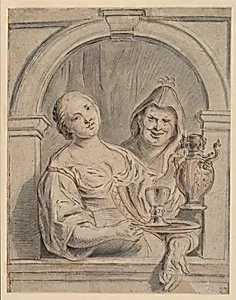
Medium
Black chalk and pen and brown ink, red chalk, and gray wash, heightened with white (oxidized)
Dimensions
11 x 8 5/8 in. (28 x 21.9 cm)
Classification
Drawings
Department
Robert Lehman Collection
Museum
Metropolitan Museum of Art, New York, NY
Credit
Robert Lehman Collection, 1975
Accession Number
1975.1.837
Rights
Public Domain
Tags
Art Historical Context
In the Robert Lehman Collection at The Metropolitan Museum of Art,The Young Woman and theter* (ca. 1640–50) by Flemish Baroque master Jacob Jordaens captivates with its intimate scale and lively character study. Jordaens, a contemporary Peter Paul Rubens, was renowned for his robust figures, theatrical compositions, and earthy depictions of everyday life, mythology, and merriment. This drawing, just 11 x 8 5/8 inches, served as a preparatory sketch, his skill in capturing human interaction with warmth and humor. Executed in a rich mix of black chalk, pen and brown ink, red chalk, gray wash, and heightened white (now oxidized), the work exemplifies 17th-century Flemish draftsmanship. These techniques allowed Jordaens to model forms with depth and vitality—red chalk for flesh tones, wash for shadows, and white highlights for dramatic light—foreshadowing the bold colors and dynamic energy of his oil paintings. Jesters, often symbols of folly and satire in Baroque art, pair here with a young woman, evoking themes of courtship, playfulness, or social commentary common in Flemish genre scenes. This gem from the Lehman Collection offers a window into Jordaens' workshop process, highlighting how such drawings bridged the gap between idea and finished masterpiece, influencing generations of artists in the vibrant Antwerp school.