
Theatre Danse IV 17
1858–78
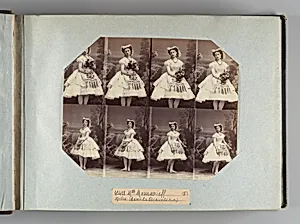
Medium
Albumen silver prints from glass negatives
Classification
Albums|Photographs
Department
Photographs
Museum
Metropolitan Museum of Art, New York, NY
Credit
Gilman Collection, Gift of The Howard Gilman Foundation, 2005
Accession Number
2005.100.588.1.1–.151
Rights
Public Domain
Art Historical Context
André-Adolphe-Eugène Disdéri's *Théâtre Danse IV *, created between 1858 and 1878, is a albumen silver print from glass negative, part of the Photographs department at The Metropolitan Museum of Art (Gilman Collection, 2005). This work belongs to a classified album of photographs, showcasing Disdéri's mastery during photography's explosive growth in mid-19th-century France As a pioneering Parisian photographer, Disdéri the medium by inventing the carte de—a small, affordable portrait format that democratized photography for the masses. The albumen process, using egg whites to bind light-sensitive silver salts, produced richly toned, finely detailed images prized for their clarity and warmth. *Théâtre Danse IV 17* likely captures the graceful energy of theater dancers, freezing ephemeral performances in time amid Paris's vibrant cultural scene. Disdéri's series reflects the era's fascination with ballet and stage arts, blending documentary precision with artistic poise. This piece highlights photography's transition from novelty to fine art, preserving cultural icons for posterity. Visitors will appreciate how Disdéri's innovations made celebrity imagery accessible, influencing modern photo albums and performance documentation.
About the Artist
André-Adolphe-Eugène Disdéri · 1819–1889
**André-Adolphe-Eugène Disdéri** (1819–1889) was a pioneering French photographer whose innovations transformed portraiture into a mass medium during the Second Empire. Born on March 28, 1819, in Paris, Disdéri pursued diverse careers in commerce, acting, and politics early on, while studying art amid personal hardships following his father's death, which compelled him to support his mother, sibli...