
Medium
Classification
Department
Smithsonian Collection
Museum
Smithsonian American Art Museum
Credit
National Portrait Gallery, Smithsonian Institution; gift of Mr. and Mrs. Paul Mellon
Accession Number
S/NPG.74.39.14.26
Rights
Public Domain
Tags
Art Historical Context
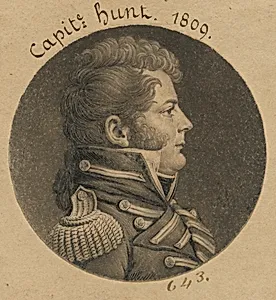
Step into the early 19th-century world of American naval heroism with *Theodore Hunt* (1809), a profile print by French-born engraver Charles Balth Julien Févret de-Mémin (1770–1852). Exiled from revolutionary France, Saint-Mémin arrived in the United States in 1793 and pioneered unique portraiture style using a mechanical "physionotrace" device. This tool allowed him to trace precise silhouettes from life, which he then hand-colored and engraved onto copper plates for reproduction—revolutionizing affordable, lifelike likenesses of America's emerging elite. The subject, Theodore Hunt, gazes resolutely in profile, his naval epaulet gleaming as a symbol of rank—likely as a captain or lieutenant in the U.S. Navy. Created in 1809 amid escalating tensions with European powers and Barbary pirates, this portrait captures Hunt during or shortly after his time as a prisoner of war, embodying the grit of early American seafaring officers who defended nascent trade routes. Saint-Mémin's meticulous line work and subtle shading highlight Hunt's dignified bearing, blending neoclassical precision with documentary realism. Housed in the Smithsonian American Art Museum's National Portrait Gallery (gift of Mr. and Mrs. Paul Mellon), this print offers a window into the personal stories behind America's maritime history, reminding us of the individuals who shaped a young nation's identity on the high seas.