
Three Dancers of Sumiyoshi or Suminoye
19th century
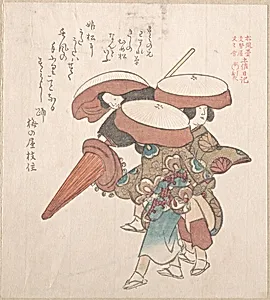
Medium
Woodblock print (surimono); ink and color on paper
Dimensions
8 x 7 1/4 in. (20.3 x 18.4 cm)
Classification
Prints
Culture & Period
Japan · Edo period (1615–1868)
Department
Asian Art
Museum
Metropolitan Museum of Art, New York, NY
Credit
H. O. Havemeyer Collection, Bequest of Mrs. H. O. Havemeyer, 1929
Accession Number
JP2069
Rights
Public Domain
Tags
Art Historical Context
In the vibrant world of Edo-period Japan (1615–8), Kubo Shunman’s *Three Dancers of Sumoshi* (early 19th century) the ethereal grace of female performers at the famed Sumiyoshi shrine. This intimate woodblock print, or *surimono*, measures just 8 x 7¼ inches, making it a luxurious private commission—often produced for poetry clubs or New Year’s greetings among the elite. Printed with ink and color on, its compact scale invited close admiration, showcasing Shunman’s mastery in the ukiyo-e tradition of depicting the "floating world" of beauty, theater, and fleeting pleasures. Surimono like this one stand out for their superior craftsmanship, frequently enhanced with embossing, mica, or metallic pigments (though not specified here), far surpassing mass-produced prints. The three dancers, poised in traditional garb, evoke sacred performances tied to Shinto rituals at Sumiyoshi, a site in Osaka renowned for its shrines and cultural festivals. Shunman, a leading surimono artist, blends delicate lines, harmonious colors, and dynamic composition to convey rhythm and elegance, highlighting women’s roles in Japan’s performing arts. Part of the Metropolitan Museum of Art’s H.O. Havemeyer Collection (1929), this print offers a window into Edo Japan’s refined aesthetic sensibilities, where art intertwined poetry, dance, and spirituality for discerning patrons.
About the Artist
Kubo Shunman · 1757–1820
Japanese, 1757–1820