
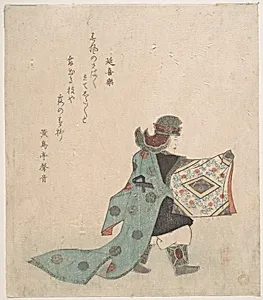
Scene from Noh Dance
ca. 1820
Medium
Woodblock print (surimono); ink and color on paper
Dimensions
8 1/16 x 7 1/16 in. (20.5 x 17.9 cm)
Classification
Prints
Culture & Period
Japan · Edo period (1615–1868)
Department
Asian Art
Museum
Metropolitan Museum of Art, New York, NY
Credit
Gift of T. Ito, Chicago, Ill, 1919
Accession Number
JP1153
Rights
Public Domain
Tags
Art Historical Context
This delicate woodblock print captures a dynamic moment from a Noh performance, featuring male dancers in elaborate traditional attire. Created around 1820 by Takashima Chiharu during Japan’s Edo period, the exemplifies the refined art of surimono—privately commissioned prints often produced in limited editions for poetry circles, New Year celebrations, or theatrical events. Measuring just over eight inches square, its intimate scale invites close viewing of the fine details rendered in ink and color on paper. Noh theater, with its slow, stylized movements and masked performers, held deep cultural significance in Edo society as a refined entertainment for the samurai class and educated elite. Surimono prints like this one elevated such scenes through exceptional craftsmanship, sometimes incorporating embossing or metallic pigments to convey the elegance of costume and gesture. The Metropolitan Museum’s example, gifted in 1919, preserves this fleeting intersection of performance and printmaking. As a window into early nineteenth-century Japanese cultural life, the print highlights how artists translated the grace and intensity of live dance into a lasting, collectible form. Its focus on male dancers underscores Noh’s emphasis on disciplined movement and dramatic expression, offering modern viewers a glimpse of an art form still revered today.