
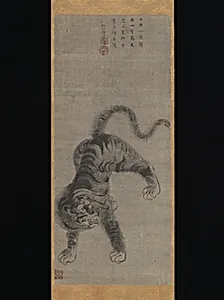
明窓筆 虎図|Tiger
early 18th century
Medium
Hanging scroll; ink and color on paper
Dimensions
30 5/8 x 13 3/8 in. (77.8 x 34 cm)
Classification
Paintings
Culture & Period
Japan · Edo period (1615–1868)
Department
Asian Art
Museum
Metropolitan Museum of Art, New York, NY
Credit
Purchase, Friends of Asian Art Gifts, 1986
Accession Number
1986.171
Rights
Public Domain
Tags
Art Historical Context
In the tranquil world of Edo-period Japan (1615–8), the hanging scroll *Tiger* by the artist Meisō captures the fierce majesty of its subject with masterful strokes of ink and color on paper. Created in the early 18th century, work measures 30 5/8 x 13 3/8 inches and exemplifies the refined tradition of Japanese scroll painting. Hanging scrolls like this were prized possessions, unrolled for special occasions to adorn a tokonoma alcove, blending artistry with seasonal display. Tigers held profound cultural symbolism in Japan, evoking power, protection, and the wild spirit of autumn, despite not being native to the islands. Influenced by Chinese artistic traditions, these motifs often appeared in literati-style paintings during the Edo era—a time of peace and artistic flourishing under the Tokugawa shogunate. Meisō's rendition likely employs delicate ink washes and vibrant colors to convey the tiger's dynamic energy, balancing realism with expressive brushwork typical of the period's painters. Now housed in the Metropolitan Museum of Art's Asian Art Department, acquired through the Friends of Asian Art in 1986, this scroll invites visitors to ponder the harmony between human creativity and nature's untamed force. A testament to Edo Japan's artistic legacy, it reminds us how a single beast could roar across centuries.