
Tile
Unknown Artist
probably 18th century
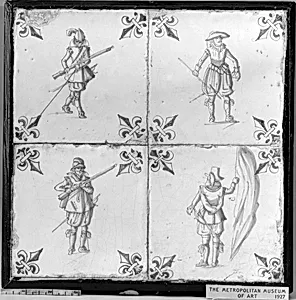
Medium
Tin-glazed earthenware
Dimensions
Overall (tile): 5 × 5 × 9/16 in. (12.7 × 12.7 × 1.4 cm); Overall (whole panel): 31 1/2 × 21 1/4 in. (80 × 54 cm)
Classification
Ceramics-Pottery
Culture
Dutch
Department
European Sculpture and Decorative Arts
Museum
Metropolitan Museum of Art, New York, NY
Credit
Fletcher Fund, 1927
Accession Number
27.199.519
Rights
Public Domain
Tags
Art Historical Context
This exquisite Dutch tile panel, crafted from tin-glazed earthenware in probable 18th century exemplifies the Netherlands' renowned tradition of Delftware ceramics. Comprising multiple 5-inch square tiles forming a 31½ × 21¼-inch composition, it once adorned the walls of a prosperous home, where such panels served both decorative and narrative purposes. The tin glaze—a lead- and tin-oxide mixture fired over earthenware—created a brilliant white ground ideal for vibrant painted designs, mimicking costly Chinese porcelain while showcasing local ingenuity. The artwork's imagery, featuring men with firearms, reflects themes of leisure, hunting, or civic militia life prevalent in Dutch Golden Age culture, even into the 18th century. These tiles were produced in workshops like those in Delft, where artisans hand-painted motifs before a final transparent glaze and firing, ensuring durability for humid interiors. Acquired through the Fletcher Fund in 1927, this piece in the Metropolitan Museum of Art's European Sculpture and Decorative Arts collection highlights the era's blend of functionality and artistry. Today, it invites visitors to ponder everyday Dutch life through humble yet masterful ceramics, bridging domestic history with enduring aesthetic appeal.