
Tile
Unknown Artist
ca. 1620–50
Medium
Tin-glazed earthenware
Dimensions
Overall (tile): 5 × 5 × 9/16 in. (12.7 × 12.7 × 1.4 cm); Overall (whole panel): 31 1/2 × 21 1/4 in. (80 × 54 cm)
Classification
Ceramics-Pottery
Culture
Dutch
Department
European Sculpture and Decorative Arts
Museum
Metropolitan Museum of Art, New York, NY
Credit
Fletcher Fund, 1927
Accession Number
27.199.527
Rights
Public Domain
Tags
Art Historical Context
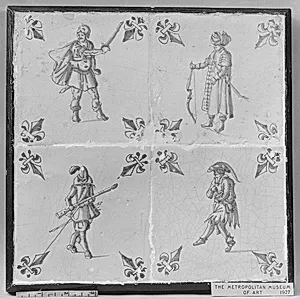
This exquisite tin-glazed earthenware tile dating to around 1620–50, hails from the Dutch Golden Age, a period of remarkable prosperity and artistic innovation in the Netherlands. Produced during the height of Delft tile-making, it forms part of a larger panel (31½ × 21¼ inches) now in the Metropolitan Museum of Art's European Sculpture andative Arts collection. The square tile measures a modest 5 × 5 inches, designed for assembly into vibrant wall decorations that adorned homes, fireplaces, and public spaces. The imagery features men wielding bows and arrows, firearms, and swords—evoking themes of warfare, hunting, or martial prowess common in 17th-century Dutch ceramics. Tin-glazing, a technique adapted from Italian maiolica, created an opaque white ground that allowed bold cobalt-blue designs to shine vividly, even under the smoke of hearth fires. These durable, affordable panels brought artistry to everyday life, reflecting the era's fascination with military glory amid conflicts like the Eighty Years' War. Acquired through the Fletcher Fund in 1927, this tile exemplifies the technical mastery and cultural pride of Dutch potters, offering visitors a window into a home's lively interior from four centuries ago.