
Tile
Unknown Artist
13th century
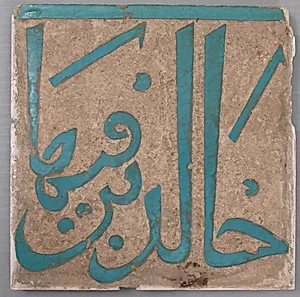
Medium
Earthenware; glazed (buff)
Dimensions
H. 11 1/4 in. (28.6 cm) W. 11 3/16 in. (28.4 cm) D. 1 1/4 in. (3.2 cm)
Classification
Ceramics-Tiles
Department
Islamic Art
Museum
Metropolitan Museum of Art, New York, NY
Credit
Gift of William B. Osgood Field, 1902
Accession Number
02.5.88
Rights
Public Domain
Tags
Art Historical Context
This 13th-century glazed earthenware tile, originating the Islamic world, exemplifies the exquisite ceramic artistry of the medieval Islamic era. Measuring nearly 11 inches square and just over an inch thick, its buff-colored earthenware body is coated with a glossy glaze—a technique perfected in regions like Persia and Syria during this period. Such tiles were crafted for architectural decoration, often forming vast, shimmering panels that adorned mosques, madrasas, and palaces transforming interiors into luminous spaces. The anonymous artisan's work reflects the height of Islamic ceramic innovation in the 13th century, when potters mastered high-fired glazes that resisted wear while allowing intricate designs in vibrant colors. Though the specific motifs on this tile are not detailed, the Arabic tag suggests possible calligraphic elements, a hallmark of Islamic art that conveyed poetry, Quranic verses, or blessings without figurative imagery. This aniconic approach emphasized geometry, rhythm, and spirituality. Today, this tile graces the Metropolitan Museum of Art's Islamic Art Department, a gift from William B. Osgood Field in 1902. It invites visitors to appreciate how everyday materials became vehicles for cultural splendor, bridging the gap between utility and divine beauty in medieval Islamic society.