
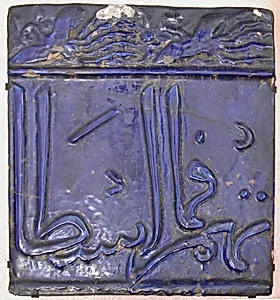
Tile from a Frieze
Unknown Artist
early 14th century
Medium
Stonepaste; molded, glazed
Dimensions
H. 15 3/4 in. (40 cm) W. 14 1/2 in. (36.8 cm)
Classification
Ceramics-Tiles
Department
Islamic Art
Museum
Metropolitan Museum of Art, New York, NY
Credit
H.O. Havemeyer Collection, Gift of Horace Havemeyer, 1940
Accession Number
40.181.3
Rights
Public Domain
Tags
Art Historical Context
This exquisite *Tile from a Frieze crafted in the early 14th century, the splendor of Islamic architectural decoration. Produced by an unknown artist, hails from the Islamic world—likely Persia or the Near East—where such tiles adorned the walls of mosques, madrasas, and palaces part of elaborate friezes. These horizontal bands of ornamentation transformed interiors into vibrant, luminous spaces, blending artistry with spirituality. The tag of "birds" hints at a graceful avian motif, a common symbol in Islamic art representing freedom, paradise gardens, or divine beauty, evoking the natural world within sacred settings. Made of stonepaste (also known as fritware), a innovative ceramic body developed by Islamic potters around the 10th century, the tile was molded into its shape and coated with a glossy glaze. This technique allowed for fine detailing and brilliant turquoise or cobalt blues that caught the light, mimicking Chinese porcelain while adapting to local tastes. Stonepaste's durability made it ideal for humid climates and high-traffic areas, ensuring these beauties endured for centuries. Measuring 15 3/4 by 14 1/2 inches, this tile from the H.O. Havemeyer Collection at the Metropolitan Museum of Art invites us to imagine its place in a larger mosaic, where patterns flowed endlessly like poetry in motion—a testament to the medieval Islamic mastery of form, color, and faith.