
Tile
Unknown Artist
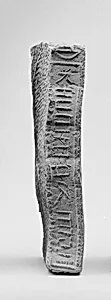
Medium
Earthenware
Dimensions
H. 2 1/2 in. (6.4 cm); W. 12 1/4 in. (31.1 cm); D. 5 1/2 in. (14 cm)
Classification
Ceramics
Culture & Period
China · Qin–Han dynasty (221 B.C.–A.D. 220)
Department
Asian Art
Museum
Metropolitan Museum of Art, New York, NY
Credit
Rogers Fund, 1910
Accession Number
10.202.12
Rights
Public Domain
Art Historical Context
This earthenware tile, hailing from China's Qin-Han dynasty (221 B.CA.D. 220), offers a glimpse into one of the most transformative eras in Chinese history. The Qin dynasty unified the warring states into a vast empire under Emperor Qin Shi Huang, famed for the Terracotta Army while the Han period brought cultural flourishing, Silk Road trade, and advancements in art and technology. Such tiles were likely used in architecture or tombs, reflecting the era's emphasis on imperial grandeur and the afterlife. Crafted from earthenware—a low-fired clay common before porcelain's invention—this rectangular tile measures a modest 2½ inches high by 12¼ inches wide and 5½ inches deep. Its form suggests molding techniques typical of Han ceramics, allowing for intricate reliefs or patterns that adorned walls or funerary structures. Earthenware's durability made it ideal for everyday and ceremonial use, showcasing early mastery of kilns and glazes. Acquired through the Rogers Fund in 1910, this piece from the Metropolitan Museum of Art's Asian Art collection highlights the ingenuity of anonymous artisans. It invites us to ponder the daily lives and spiritual beliefs of ancient China, where even simple tiles embodied cosmic harmony and enduring legacy.