
Tile
Unknown Artist
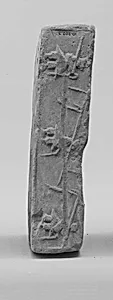
Medium
Earthenware
Dimensions
H. 3 in. (7.6 cm); W. 12 3/4 in. (32.4 cm); D. 6 1/4 in. (15.9 cm)
Classification
Ceramics
Culture & Period
China · Qin–Han dynasty (221 B.C.–A.D. 220)
Department
Asian Art
Museum
Metropolitan Museum of Art, New York, NY
Credit
Rogers Fund, 1910
Accession Number
10.202.3
Rights
Public Domain
Art Historical Context
This earthenware tile, hailing from China's Qin–Han dynasty ( B.C.–A.D. 220), offers a glimpse into one of the most transformative eras in Chinese history. The Qin dynasty unified the warring states into a vast empire under Emperor Qin Shi Huang, famed for Terracotta Army, while the Han dynasty expanded trade along the Silk Road and refined imperial arts. Such tiles, produced during this period, were essential for architecture and funerary structures, adorning tombs, palaces, and walls to ward off evil spirits and celebrate the afterlife. Crafted from earthenware—a low-fired clay valued for its durability and earthy tones—this rectangular piece measures a modest 3 inches high but stretches nearly 13 inches wide and 6 inches deep, suggesting use as a decorative frieze or roof element. Qin-Han potters mastered molding and incising techniques, often imprinting motifs that reflected cosmology, nature, or mythical guardians, blending functionality with spiritual symbolism. Acquired through the Rogers Fund in 1910, this artifact at the Metropolitan Museum of Art embodies the ingenuity of early imperial China, where ceramics bridged the mortal world and eternity. Visitors, imagine it gleaming under ancient sunlight, a testament to a civilization's enduring legacy.