
Tile
Unknown Artist
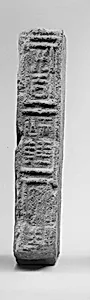
Medium
Earthenware
Dimensions
H. 2 3/8 in. (6 cm); W. 13 in. (33 cm); D. 5 1/2 in. (14 cm)
Classification
Ceramics
Culture & Period
China · Qin–Han dynasty (221 B.C.–A.D. 220)
Department
Asian Art
Museum
Metropolitan Museum of Art, New York, NY
Credit
Rogers Fund, 1910
Accession Number
10.202.14
Rights
Public Domain
Art Historical Context
This exquisite earthenware tile hails from China's Qin-Han dynasty (221 B.C.–A.D. 220), a transformative era that saw the unification of the empire under the Qin and the cultural flourishing of the Han. Measuring a modest 2⅜ × 13 × 5½ inches, this ceramic piece exemplifies the architectural and decorative arts of ancient China, likely used in tombs, walls, or palaces to adorn surfaces with subtle elegance. Crafted from earthenware—a low-fired clay abundant in early Chinese ceramics—this tile highlights the period's mastery of molding and low-temperature firing techniques. Before the later invention of high-fired porcelain, earthenware was prized for its durability and ability to capture intricate forms, often glazed or left in earthy tones to evoke the natural world. Its rectangular shape and depth suggest it formed part of a larger frieze or panel, contributing to the monumental scale of Han-era constructions. Acquired through the Rogers Fund in 1910 and now in the Metropolitan Museum of Art's Asian Art Department, this anonymous artwork offers a window into the daily ingenuity of Qin-Han artisans. It reminds us how ceramics bridged utility and artistry, preserving the legacy of an empire that laid the foundations of imperial China.