
Tile
1757–61
Medium
Earthenware, transfer-printed
Dimensions
5 x 5 in. (12.7 x 12.7 cm)
Classification
Tile
Culture
British
Department
The American Wing
Museum
Metropolitan Museum of Art, New York, NY
Credit
Gift of Mrs. J. Insley Blair, 1942
Accession Number
42.197.15
Rights
Public Domain
Tags
Art Historical Context
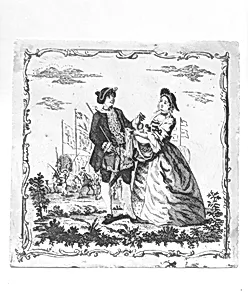
This charming 5 x 5-inch earthenware, crafted by British innovator John Sadler between 1757 and 1761, exemplifies the dawn of a transformative era in ceramic decoration. Sadler, based in Liverpool, England, was a pioneer in transfer-printing—a groundbreaking technique that revolutionized pottery production. Rather than hand-painting each piece, designs were printed onto thin tissue paper from engraved copper plates, then transferred onto unglazed earthenware and fired, allowing for vibrant, repeatable patterns at scale. This tile, likely featuring figures of men and women (as suggested by its motifs), showcases the crisp black-line imagery typical of early transfer-prints. Historically, Sadler's method, developed around 1756 with partner Guy Green, made decorated ceramics affordable for middle-class homes across Britain and beyond, fueling the 18th-century ceramics boom amid growing consumer culture and colonial trade. Displayed in The Metropolitan Museum of Art's American Wing, this tile reflects transatlantic exchange; such British wares were prized in colonial American households for fire surrounds, hearths, and decorative panels. Gifted in 1942 by Mrs. J. Insley Blair, it invites us to appreciate how everyday objects embodied industrial ingenuity and artistic accessibility.