
Tile
1757–61
Medium
Earthenware, transfer-printed
Dimensions
5 x 5 in. (12.7 x 12.7 cm)
Classification
Tile
Culture
British
Department
The American Wing
Museum
Metropolitan Museum of Art, New York, NY
Credit
Gift of Mrs. J. Insley Blair, 1942
Accession Number
42.197.18
Rights
Public Domain
Tags
Art Historical Context
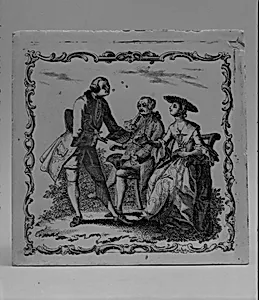
This charming earthenware tile, created by British artist John Sadler between 1757 and 1761, exemplifies an important innovation in 18th-century ceramics. Measuring just five inches square, it was produced using the transfer-printing technique, a groundbreaking method Sadler helped pioneer in Liverpool. This process allowed intricate designs to be printed from engraved plates onto pottery, making decorative tiles more affordable and widely available than traditional hand-painted versions. The tile’s presence in the Metropolitan Museum’s American Wing highlights the strong transatlantic exchange of British decorative arts during the colonial period. Featuring scenes with men and women, it reflects the everyday interests and fashions of Georgian-era Britain while demonstrating how new industrial techniques began transforming domestic objects into vehicles for popular imagery. Such works helped bring art into ordinary homes, bridging fine art traditions with emerging mass production. Today, this modest yet historically significant piece offers visitors a glimpse into the early days of industrial design, where craftsmanship met innovation to shape both British and American material culture.