
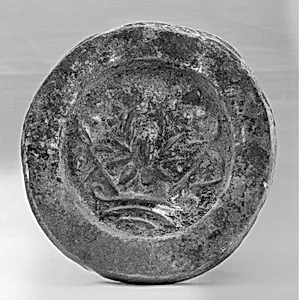
Tile end with lotus flower
Unknown Artist
16th–17th century
Medium
Earthenware
Dimensions
Diam. 5 3/8 in. (13.7 cm)
Classification
Ceramics
Culture & Period
China · Ming dynasty (1368–1644)
Department
Asian Art
Museum
Metropolitan Museum of Art, New York, NY
Credit
Gift of Mr. John Stemme, 1910
Accession Number
10.81.45
Rights
Public Domain
Art Historical Context
This delicate earthenware tile end, adorned with a blooming lotus flower, hails from China's Ming dynasty (1368–1644), specifically the 16th–17th century. Measuring just 5⅜ inches in diameter, it likely served as a decorative finial or edge piece in architectural settings, such as roofs, walls, or garden pavilions. During the Ming era, ceramics reached extraordinary heights of artistry, with earthenware like this providing affordable yet elegant ornamentation for homes, temples, and imperial structures. The lotus motif holds deep cultural resonance in Chinese art, symbolizing purity, enlightenment, and rebirth—rising pristine from muddy waters, much like Buddhist ideals of spiritual awakening. Ming potters mastered vibrant glazes and molded designs to capture the flower's layered petals and serene grace, blending functionality with symbolism. Though the artist remains unknown, this piece exemplifies the period's technical prowess in low-fired earthenware, which allowed for intricate relief work suited to outdoor durability. Today, this treasure graces the Metropolitan Museum of Art's Asian Art Department, a gift from Mr. John Stemme in 1910. It invites us to ponder the everyday beauty that once embellished Ming life, bridging ancient craftsmanship with modern admiration.