
Tile Panel
Unknown Artist
first quarter 17th century
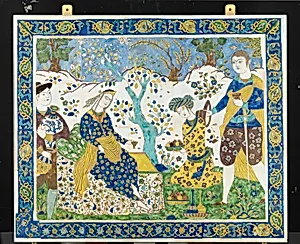
Medium
Stonepaste; polychrome glazed within black wax resist outlines (cuerda seca technique)
Dimensions
Panel: H. 45 1/2 in. (115.6 cm) W. 54 5/8 in. (138.7 cm) D. 2 9/16 in. (6.5 cm) Wt. 356 lbs. (161.5 kg) Each tile: H. 8 7/8 in. (22.5 cm) W. 8 7/8 in. (22.5 cm) Top Mounts: H. 2 3/8 in. (6 cm) W. 2 in. (5.1 cm) D. 1/2 in. (1.3 cm) Bottom mounts: H. 1 in. (2.5 cm) W. 1 in. (2.5 cm) D. 1/2 in. (1.3 cm)
Classification
Ceramics-Tiles
Department
Islamic Art
Museum
Metropolitan Museum of Art, New York, NY
Credit
Rogers Fund, 1903
Accession Number
03.9a
Rights
Public Domain
Tags
Art Historical Context
This striking tile panel, created in the first quarter of the 17th century, exemplifies the refined ceramic traditions of Islamic art. Crafted from stonepaste and decorated with polychrome glazes, the work employs the cuerda seca technique, in which black wax-resist outlines prevent colors from bleeding together during firing. This method allowed artisans to achieve crisp, vibrant designs across large surfaces, making it ideal for architectural decoration in palaces, mosques, and private residences. The panel’s imagery—featuring men and women amid flowering trees—reflects the period’s appreciation for both figural storytelling and lush natural motifs. Such compositions often adorned interior spaces, transforming walls into colorful narratives that blended human activity with the beauty of the natural world. Each of the square tiles measures roughly nine inches across, demonstrating the precision required to assemble a seamless, large-scale composition. Acquired by the Metropolitan Museum through the Rogers Fund in 1903, this piece highlights the enduring appeal of cuerda seca tilework. Its substantial weight and careful mounting underscore both the technical mastery and the cultural value placed on these durable, luminous surfaces in Islamic decorative arts.