
Tile Panel
Unknown Artist
17th century
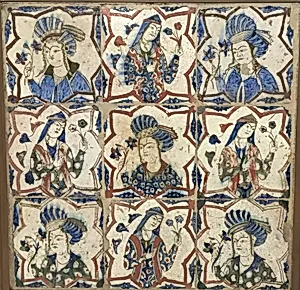
Medium
Stonepaste; polychrome underglaze painted under colorless glaze
Dimensions
Overall Frame: H. 23 1/8 in. (58.7 cm) W. 23 1/8 in. (58.7 cm)
Classification
Ceramics-Tiles
Department
Islamic Art
Museum
Metropolitan Museum of Art, New York, NY
Credit
Rogers Fund, 1911
Accession Number
11.74.2
Rights
Public Domain
Tags
Art Historical Context
This stunning 17th-century Tile, crafted by an unknown artist, exemplifies the exquisite ceramic artistry of the Islamic world. Measuring a perfect square at 23⅛ inches on each side, it likely adorned the walls of a grand architectural interior, such as a palace, hammam, or private residence. The tags hint at lively scenes featuring men and womenpossibly portraits set against architectural motifs—bringing a human warmth to the decorative tradition. Made from stonepaste (a fine fritware body prized for its hardness and ability to hold intricate details), the panel showcases polychrome underglaze painting beneath a colorless glaze. This technique, perfected in regions like Iran and the Ottoman Empire during the Safavid and early Ottoman periods, allowed vibrant blues, greens, turquoises, and reds to shine through a protective, lustrous surface. It ensured durability against humidity and wear, making such tiles ideal for architectural use. In the context of Islamic art, these panels highlight a secular figurative style, where human figures flourished in non-religious settings, blending portraiture with ornamental patterns. Acquired through the Rogers Fund in 1911, this piece at the Metropolitan Museum of Art invites visitors to imagine the bustling lives it once reflected, a testament to the era's masterful fusion of function, beauty, and storytelling.