
Tile Panel
Unknown Artist
16th–17th century
Medium
Stonepaste; underglaze painted
Dimensions
H. 29 in. (73.7 cm) L. 19 in. (48.3 cm) W. 1 1/2 in. (3.8 cm)
Classification
Ceramics-Tiles
Department
Islamic Art
Museum
Metropolitan Museum of Art, New York, NY
Credit
Rogers Fund, 1923
Accession Number
23.12.2a–f
Rights
Public Domain
Tags
Art Historical Context
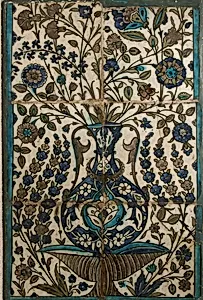
This exquisite Tile Panel, crafted by an unknown artist in the16th–17th, exemplifies the masterful ceramic traditions of the Islamic world. Made from stonepaste—a durable, fine-grained body developed in the medieval Islamic Near East—and adorned with underglaze painting the panel measures an impressive 29 inches high by 19 inches long. Underglaze techniques involved applying pigments beneath a transparent glaze before firing, ensuring vibrant, long-lasting colors resistant to wear, ideal for architectural settings. Housed in the Metropolitan Museum of Art's Islamic department, this piece likely graced the walls of a mosque, palace, or public building, where such tiles transformed interiors into shimmering displays of geometry and flora. During the 16th–17th centuries, tilework flourished across the Ottoman Empire, Safavid Iran, and Mughal India, symbolizing paradise gardens and divine order through intricate patterns. Its architectural tag underscores its role in Islamic design, where tiles provided both decoration and protection against humidity. Acquired through the Rogers Fund in 1923, this panel invites visitors to appreciate the anonymous artisans' skill, blending functionality with spiritual beauty in a timeless craft.