
Tile Panel
Unknown Artist
18th century
Medium
Stonepaste; underglaze painted
Dimensions
H. 30 (76.2 cm) W. 30 1/4 in. (76.8 cm) D. 1 1/2 in.
Classification
Ceramics-Tiles
Department
Islamic Art
Museum
Metropolitan Museum of Art, New York, NY
Credit
Rogers Fund, 1907
Accession Number
07.191
Rights
Public Domain
Tags
Art Historical Context
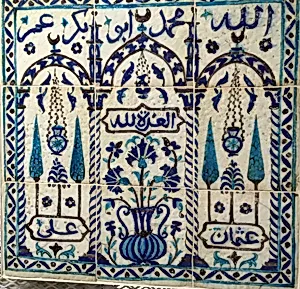
This stunning 18th-century tile panel, crafted from stonepaste with underglaze, exemplifies the exquisite ceramic artistry of the Islamic world. Measuring a square 30 by 30 inches, it was designed for architectural embellishment, likely adorning the walls of a mosque, palace, oram. Stonepaste—a composite of quartz, clay, and frit—created a durable, almost porcelain-like body prized for its ability to hold vibrant colors and fine details without cracking under heat. The underglaze technique involved painting pigments directly onto the unfired body before applying a transparent glaze and firing, ensuring the floral motifs bloomed with enduring luminosity. Flourishing with intricate flower patterns, the panel reflects the Islamic tradition of nature-inspired decoration, where blooms symbolized paradise gardens and eternal beauty—a motif rooted in Persian and Ottoman aesthetics. These tiles not only beautified spaces but also protected surfaces from moisture and wear, blending utility with opulence. Acquired through the Rogers Fund in 1907, this anonymous masterpiece now graces the Metropolitan Museum of Art's Islamic Art department, inviting visitors to appreciate the timeless elegance of a craft that transformed everyday architecture into poetic splendor.