
Tiles (8)
Unknown Artist
16th–17th century
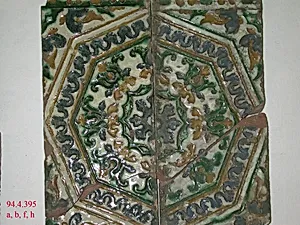
Medium
Tin-glazed earthenware
Classification
Ceramics-Pottery
Culture
Spanish, Seville
Department
European Sculpture and Decorative Arts
Museum
Metropolitan Museum of Art, New York, NY
Credit
Gift of Henry G. Marquand, 1894
Accession Number
94.4.395a–h
Rights
Public Domain
Art Historical Context
These eight exquisite tiles, crafted in Seville, Spain, during the 16th–17th centuries, exemplify the golden age of Spanish ceramic artistry. Seville emerged as a vibrant hub for tile production, blending Iberian traditions with influences from Islamic pottery techniques introduced centuries earlier. These pieces, part of the Metropolitan Museum of Art's European Sculpture and Decorative Arts collection, were generously gifted by Henry G. Marquand in 1894, preserving a slice of Spain's rich architectural heritage for modern audiences. Made of tin-glazed earthenware—a technique where a tin-opacified glaze creates a brilliant white surface ideal for vivid polychrome decoration—these tiles showcase the mastery of majolica-style pottery. The tin glaze not only ensured durability for wall and floor applications but also allowed artisans to paint intricate designs in cobalt blue, yellows, greens, and manganese purple before firing, yielding luminous, jewel-like colors that withstand time. In Sevillian homes, churches, and palaces, such azulejos adorned interiors, offering both aesthetic splendor and practical protection against humidity. Though the specific motifs remain a mystery without further detail, these tiles invite us to imagine their role in opulent Renaissance-era settings, where ceramics elevated everyday spaces into artistic statements. A testament to anonymous craftsmanship, they highlight how Seville's potters fueled Europe's fascination with decorative tiles.