
Timepiece
1802–5
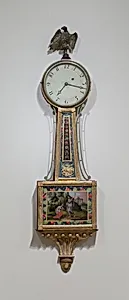
Medium
Gilt mahogany and white pine, painted glass, gesso, iron, steel, and brass
Dimensions
H.: 109.2 cm (43 in.)
Classification
furniture accessory
Department
Arts of the Americas
Museum
Art Institute of Chicago
Accession Number
144345
Rights
Public Domain
About this artwork
Elnathan Taber apprenticed with a member of the Willard family clockmakers of Roxbury, who dominated the clock-making industry at the turn of the 18th century. In 1801 Simon Willard patented a timepiece that hung on the wall and featured an eight-day movement with pendulum and a weight. This wall clock is also known as a banjo clock because of its shape. The painter of the glass panels is unknown but shows an unusual sophistication and subject matter. Classically-inspired themes such as these fi...
Art Historical Context
Created between 1802 and 1805 by Elnathan Taber, *Timepiece* represents an elegant example of early American craftsmanship. At 43 inches tall, this functional yet decorative object blends utility with artistry, serving as both a reliable timekeeper and a refined household accent during a period when accurate clocks were becoming increasingly valued in daily life. The piece is crafted from gilt mahogany and white pine, enhanced with painted glass, gesso, iron, steel, and brass. These materials allow for a luminous surface treatment and precise mechanical components, demonstrating the careful integration of woodworking, metalwork, and decorative painting typical of such accessories. The gilding and painted details elevate the clock beyond mere function, turning it into a focal point of interior design. Now part of the Art Institute of Chicago’s Arts of the Americas collection, *Timepiece* invites visitors to appreciate how early 19th-century makers combined technical skill with aesthetic sensibility to create objects that remain both informative and beautiful today.