
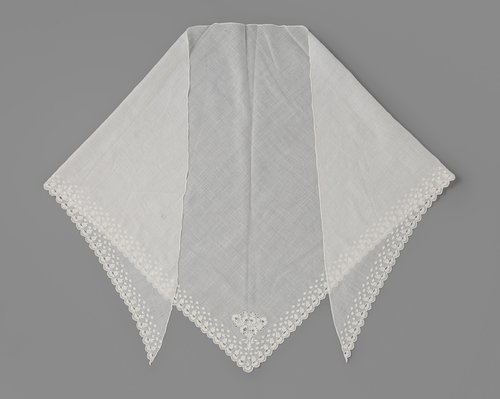
Tipdoek van batist met wit borduurwerk
c. 1850 - c. 1860
Medium
whitework
Dimensions
164; 68; 98; 98
Rights
Public Domain
About this artwork
length 164 cm x length 98 cm x length 98 cm x height 68 cm
Art Historical Context
**Tipdoek van Bat met Wit Borduurwerk *c. 1850–1860, Anonymous, Whitework on batiste, Length c. 164 cm* This exquisite *tipdoek*, or traditional Dutch baptismal cloth, is a delicate masterpiece of 19th-century needlework crafted from fine batiste—a lightweight, sheer linen or cotton fabric prized for its elegance and purity. Dating to around 1850–1860, it measures approximately 164 cm in length, with additional panels of 98 cm x 98 cm and a height of 68 cm, suggesting a structured form possibly designed as a canopy or veil held over a baptismal font during ceremonies. Whitework embroidery, executed entirely in white thread on white fabric, creates subtle patterns through techniques like satin stitch, eyelet holes, and fine hemstitching, evoking a sense of ethereal transparency and symbolic innocence. In Victorian-era Netherlands and surrounding regions, such cloths were cherished family heirlooms, often handmade by women as acts of devotion and skill. The anonymity of the maker highlights the communal craft tradition, where personal artistry served religious rituals marking new life. This piece exemplifies whitework's artistic significance: its monochromatic restraint demands masterful precision, transforming simple fabric into a textured, luminous object that catches the light beautifully. Today, it invites us to appreciate the quiet luxury of everyday sacred objects, reminding visitors of the enduring cultural role of embroidery in preserving heritage and spirituality.
About the Artist
anonymous
In the vast tapestry of art history, "Anonymous" stands not as a singular individual but as a collective designation for countless unidentified creators whose works have endured across millennia. These artists, spanning prehistoric cave painters to medieval illuminators and folk craftsmen, produced the foundational layers of human visual culture. Prior to the Renaissance, when individual fame emer...